All Posts
여기요 or 저기요? How to Actually Get a Server’s Attention in Korean
How to call a waiter in Korean — 저기요 works anywhere, 여기요 is restaurant-flavored, and 잠깐만요 is the phrasebook trap. Learn what actually works.
Korean Numbers and Time: One Guide to the Two-System Split
Tell time in Korean without freezing. The hour pulls from one number system, the minute from the other — here's the one rule that unlocks it.
먹어요 (Meogeoyo) vs 마셔요 (Masyeoyo): Why Koreans ‘Eat’ Water
Why do Koreans say 물 먹어요 instead of 마셔요? Learn how 먹다 actually means "take in" — covering water, medicine, age, and even your mind.

선생님 (Seonsaengnim): Why Koreans Call Doctors ‘Teacher’
Why do Koreans call doctors teachers? 선생님 (seonsaengnim) isn't just 'teacher' — it's a respect title for any knowledge expert. Korean honorific explained.
사흘 (Saheul): 3 Days or 4? The Korean Day-Counting Trap
사흘 means 3 days, not 4 — even though 사 sounds like the Sino-Korean number four. Here's why this native Korean word trips up learners and Koreans alike.
위 (Wi) and 아래 (Arae): Why Korean Directions Feel Backward
Learn why Korean location words like 위에 (on) and 아래에 (under) come AFTER the noun. Master 위, 아래, 앞, 뒤 with simple examples and word-order tips.
Korean Compound Vowels: How ㅘ ㅙ ㅚ Work — 한글 (Hangul) Beginner Tip
ㅘ is just ㅗ + ㅏ said fast. Learn how Korean compound vowels work in 60 seconds with real words like 사과 (apple) and 화요일 (Tuesday).
우리 (Uri): Why Koreans Say 우리 남편 (Uri Nampyeon) — ‘Our Husband’
Korean speakers say 우리 남편 ('our husband') — but it's not shared. Learn how 우리 (u-ri) works in Korean culture and start using it like a local.
새벽 (Saebyeok): Why 1 AM Isn’t 아침 (Achim) in Korea
Discover 새벽 (saebyeok) — the Korean word for the pre-dawn hours English can't quite translate. Learn how Koreans really slice the day.
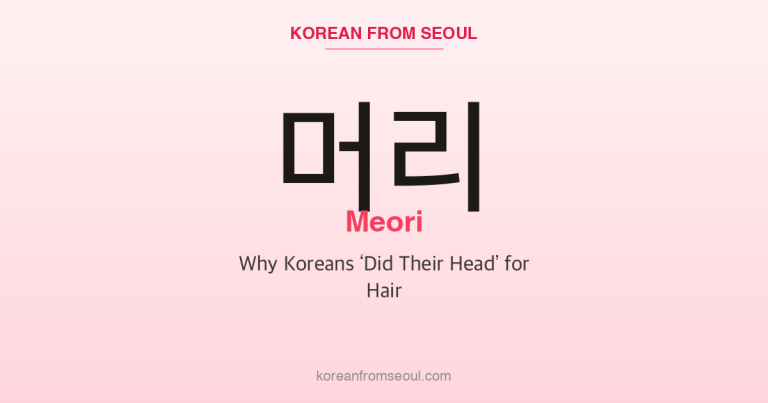
머리 (Meori): Why Koreans ‘Did Their Head’ for Hair
Discover why Koreans use one word — 머리 (meori) — for head, hair, and mind. Learn the salon phrase and how context flips the meaning.